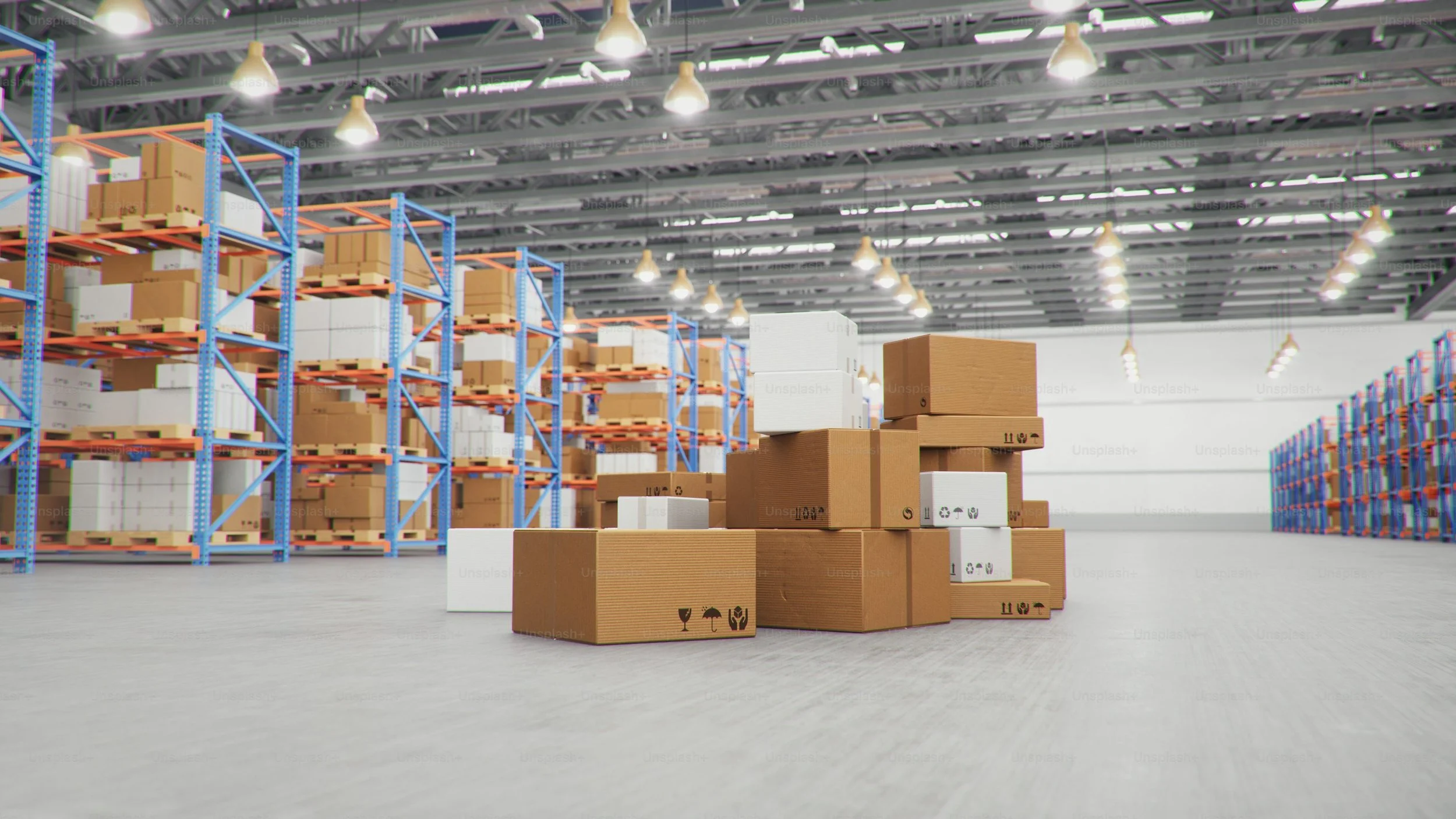
Dahua Warehouse
1. Warehouse Management Optimisation
1.1 Warehouse Management System (WMS) Coordination
We support the use and setup of appropriate Warehouse Management Systems (WMS) to help organise inventory records, inbound and outbound movements, and basic stock visibility.
Inventory levels are tracked through barcode-based processes to improve accuracy and reduce manual errors, ensuring clearer stock control and reporting.
Storage locations are organised based on product type, size, and turnover frequency to improve picking efficiency and operational clarity.
1.2 Streamlined Inbound Handling Process
Inbound goods are checked, recorded, and logged upon arrival to ensure quantities and packaging match shipping documentation.
FIFO (First-In, First-Out) principles are applied where appropriate to reduce stock ageing and minimise operational risk.
Warehouse space is arranged by product category and order frequency, helping improve internal movement efficiency and reduce handling time.
1.3 Cost Efficiency & Flexible Warehousing Solutions
We operate a flexible, partner-based warehousing model that allows businesses to use space according to their actual needs rather than committing to long-term fixed capacity.
Storage solutions can be adjusted based on volume, turnover speed, and operational requirements, helping control costs during early-stage or test operations.
Where required, we can assist in coordinating specialised storage solutions through partners for goods with specific handling requirements.
Optimization Solutions for Warehousing Management, Order Fulfillment, and Last-Mile Delivery
LIDI FULFLOW is committed to supporting businesses operating in the UK by providing efficient, reliable, and cost-effective solutions across warehousing, order handling, and logistics coordination. We work with cross-border e-commerce sellers, international trade companies, and growing brands to help streamline operations, improve fulfilment efficiency, and manage distribution more effectively.
Our objective is to simplify operational complexity, enhance supply chain performance, and support sustainable, scalable business growth while maintaining clear processes and realistic execution.
2. Order Fulfillment Optimization
2.1 Fast Picking & Packing
AI-driven order picking system, automatically assigning picking tasks based on optimized routes to reduce processing time.
Multi-level packaging optimization, customizing packaging sizes to reduce material waste and shipping costs.
Bulk order processing & automated label printing, integrating with multiple platforms such as Amazon, eBay, and Shopify for seamless order fulfillment.
2.2 Multi-Channel Order Management
API integration with e-commerce platforms (Amazon, eBay, AliExpress, Shopify) to enable automatic order syncing.
Multi-warehouse coordination, allocating orders to the nearest warehouse based on customer location and stock availability.
Automated inventory replenishment, analyzing sales data to forecast stock shortages and notify merchants in advance.
2.3 Returns & Reverse Logistics Optimization
Smart return management system, utilizing AI to categorize and process returns efficiently.
Refurbishing & repackaging services, allowing resalable returned products to be restored and repacked, reducing financial losses.
Cost-effective reverse logistics, partnering with carriers to provide low-cost return shipping options.
3. Last-Mile Delivery Optimization
3.1 Optimized Logistics Channels
Multiple shipping options, partnering with DHL, UPS, FedEx, DPD, and Royal Mail to offer economy, standard, and express delivery services.
Regional delivery partnerships, establishing local distribution hubs in key markets such as Europe and North America to reduce cross-border shipping costs and transit times.
AI-driven route planning, leveraging big data to optimize delivery paths, enhance efficiency, and reduce transportation costs.
3.2 Real-Time Tracking & Transparency
Live shipment tracking, allowing customers to monitor order status through the LIDI DAHUA No.1 Warehouse management system.
Smart exception alert system, automatically notifying merchants and customers of delays, lost shipments, or delivery issues for proactive resolution.
Data analytics & logistics optimization, leveraging AI-driven insights to continuously refine delivery strategies and minimize disruptions.
3.3 Green Logistics & Sustainability
Eco-friendly packaging, using recyclable materials to reduce carbon footprint.
Carbon-neutral logistics options, offering low-emission transportation choices such as electric vehicle delivery or carbon offset programs.
Warehouse energy management, implementing smart lighting and energy-efficient equipment to lower operational costs.
4. Key Advantages of Our Solutions
Optimized Warehousing – Intelligent inventory management to reduce stockouts and excess inventory.
Efficient Order Fulfillment – Automated order processing to speed up picking and shipping.
Enhanced Last-Mile Delivery – AI-driven logistics to cut costs and improve delivery times.
Sustainable & Green Logistics – Eco-friendly packaging and low-carbon delivery solutions.